
In 2003 I was still in the Law Department at ALLTEL. As I’ve mentioned several times it was an invaluable experience .
It wasn’t always easy, but it was always educational.
ALLTEL was a phone company with a retail component – which meant marketing and entertainment. Marketing means advertising (signs) and entertainment means, well – something fun (think sports). Neither should include lawyers, except when there’s a contract involved (or someone propositions an attractive sales associate during a golf tournament – but that’s another story).
One way to kill two birds with one stone is a sponsorship agreement with a major sports venue. You pay lots of money to put your advertising all over the place and rent a box to entertain customers.
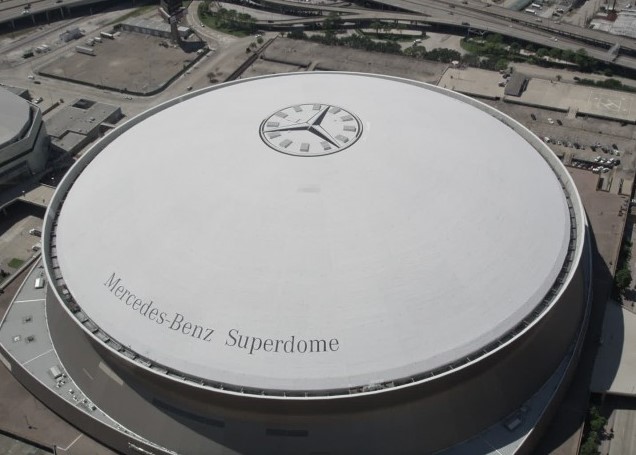
Sponsorship agreements are a treat for an in-house lawyer. They’re usually not too difficult; and, if you play your cards right you may get invited to something fun. In 2003, I got to work on ALLTEL’s sponsorship agreement for the Superdome in New Orleans. It wasn’t the primary sponsorship (which is now Mercedes) but it was substantial: a sky box, seats, signage, advertisements during events, etc. It was a lot of fun to work on and the lawyer on the other side was easy to work with.
We quickly worked through the key points but got stuck on one clause. In contract law there’s a concept known as Force Majeure. Basically it is an “Act of God” provision that means a party’s rights or obligations are suspended for certain catastrophic events (war, strike, etc.). These are usually pretty standard clauses, and typically no one pays enough attention to them, but in this instance the proposed clause was very broad. Basically, no matter the reason, if the Superdome shut down, we would still be required to pay for all of our fees.
I objected that the Force Majeure provision was too broad and unfair. We should only have to pay for what we use while the facility is open. The lawyer and I went round and round on this point and the other lawyer grew frustrated with me.
Finally he blurted – “It’s the Superdome – what could possibly happen to it?” It was a good point, and a well placed statement. He made me feel like I was being unreasonable – which is a great negotiating tactic.
Fortunately, we met in the middle, because this was a lesson that took years to develop. In spite of what appeared obvious, the Superdome wasn’t bulletproof, later being shut down nearly a year for repairs due to damage caused by Hurricane Katrina. I always think of what could’ve happened and how I dodged a bullet, not by skill but rather the grace of God, which revealed a valuable lesson not to be forgotten. Had I bowed to a seemingly concrete position, we would’ve been responsible for continuing to pay for everything while the Superdome was closed.
It is in fact reasonable to trust your gut regarding a potential risk, especially in the face of convincing, but untested, evidence.
 Hokiejackson
Leave a comment